
Wrought Iron Railings in Alameda, CA
Hand-forged ornamental iron and steel railings, custom-fabricated in our shop and finished to survive East Bay salt air.
Timeless ironwork, built for local homes
Wrought iron is the railing that gives a home character. From the scrollwork on a Gold Coast Victorian to a clean, contemporary steel picket on a modern remodel, hand-forged iron carries a weight and detail that no aluminum extrusion can match. At Alameda Custom Railing we design, forge, weld, and finish ornamental iron and mild carbon steel railings in our own shop, then install them to meet California code. If you want a railing that looks like it belongs on your house and lasts for decades, this is where we start.
Because we fabricate in-house, we can match an existing historic pattern, reproduce a broken balustrade, or draw something entirely new. Call (510) 390-9618 for a free on-site estimate.
What it is and who it's for
Wrought iron railings are a type of ornamental metal guardrail and handrail, hand-forged from steel and finished to resist corrosion.
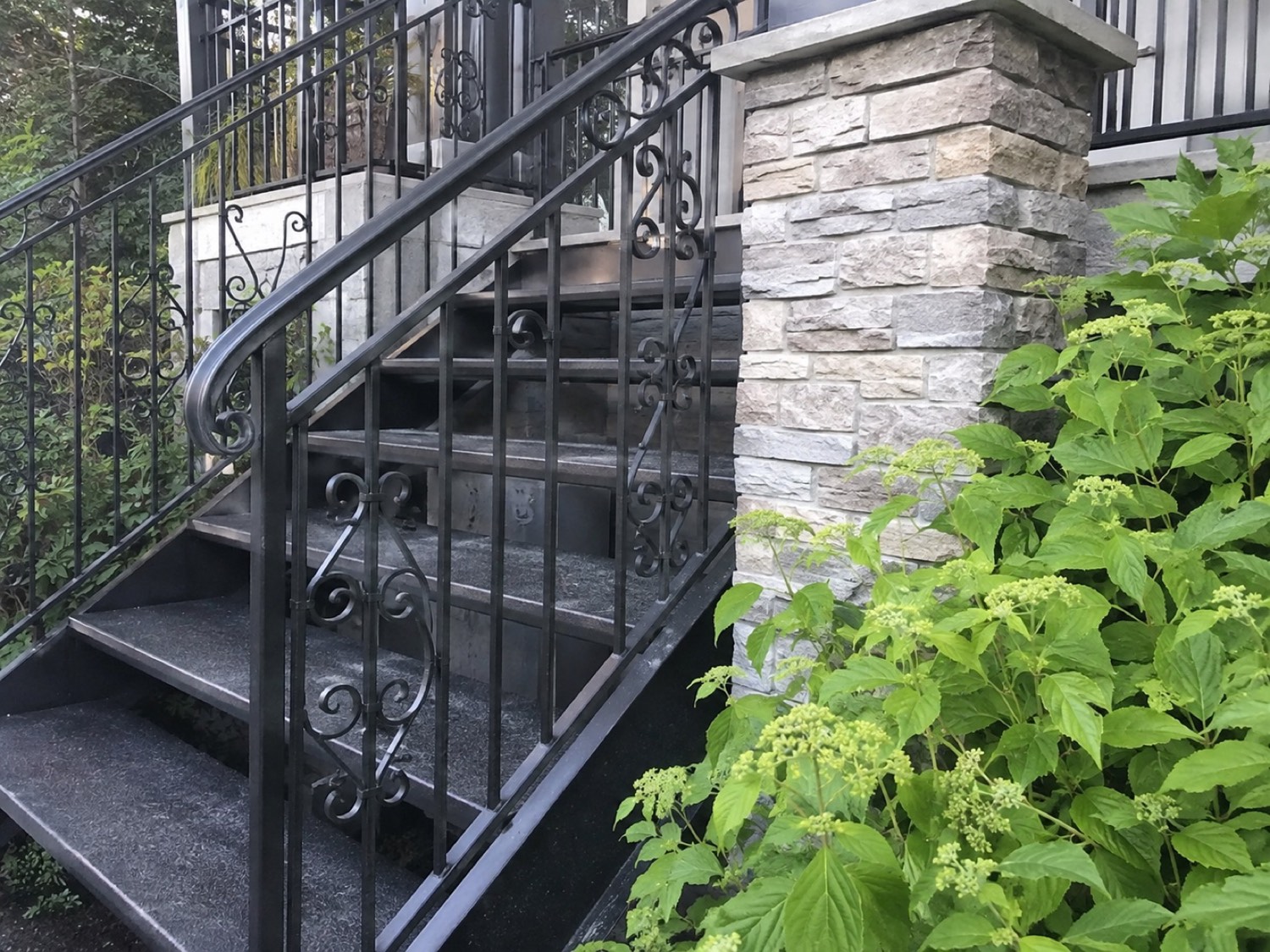
True ornamental ironwork is steel that is heated, bent, scrolled, and welded into balusters, top rails, and decorative panels. It suits homeowners who want a substantial, traditional, or ornate look: balcony and porch rails, entry stoops, interior stair balustrades, window guards, and fence panels. It is the natural choice for the East Bay's enormous stock of Victorian, Edwardian, and Craftsman homes, where a period-appropriate profile matters. It also works beautifully in a stripped-down modern vocabulary, using simple square bar and a matte black powder coat.
Iron is heavier and more labor-intensive than aluminum or cable, which is part of its appeal and part of its cost. It rewards restoration work, ornamental detail, and any project where permanence and craftsmanship are the point.
Styles, materials, and finishes
We work in genuine hand-forged wrought iron detailing and in mild carbon steel for structural rails and pickets. Common configurations include:
- Ornamental balcony and porch rails with forged scrolls, baskets, and collars.
- Historic restoration panels matched to an existing Victorian or Edwardian pattern.
- Modern steel pickets in square or round bar with a minimal top rail.
- Window guards, fence panels, and stair balustrades that tie the whole property together.
Finish is everything near the water. For coastal exposure we recommend hot-dip galvanizing followed by an electrostatic, oven-cured powder coat, sometimes over a zinc primer. That layered system protects the steel far better than paint alone and is why our coastal iron holds up. Inland projects can often use a quality powder coat directly over properly prepared steel. We will spell out the right system for your location during the estimate.
Code compliance
A guard is required wherever a walking surface sits more than 30 inches above the grade below. Guards are typically built to 42 inches tall across East Bay departments, and the openings between balusters must not pass a 4-inch sphere (6 inches at the triangular opening beside a stair tread). Graspable handrails run 34 to 38 inches above the stair nosing and must be continuous. Guards are engineered to resist 20 pounds per linear foot at the top rail, and handrails a 200-pound concentrated load. These figures come from the California Building Code and California Residential Code; always confirm the current numbers with your local building department, since Alameda, Oakland, and Berkeley each administer their own permits. For historic homes, the California Historical Building Code (Section 8-504) can allow period-appropriate solutions that a straight code reading would not.
How we build your railing
Consult & Measure
We visit your home, discuss style, and take precise field measurements at no cost.
CAD & Shop Drawings
We draw the railing, match any historic profile, and confirm the layout with you.
Engineering & Code Review
We check heights, spacing, and loads against local code and pull permits as needed.
Forge, Weld & Fabricate
We cut, forge, and weld the iron in our shop to your approved drawings.
Finishing
We galvanize and powder-coat for corrosion resistance, especially near the coast.
Install & Inspect
We anchor the railing securely and walk it through final code and safety inspection.
Built for the East Bay
Iron and salt air are natural enemies, and nowhere is that clearer than in Alameda. As a low-lying island city near sea level, Alameda gets some of the most aggressive marine corrosion in the county, which is exactly why finish quality is our obsession. A galvanized-then-powder-coated railing on a Bay Farm balcony will outlast a painted one many times over. In the hills of Oakland and Berkeley, where homes perch on steep lots along the Hayward Fault, we focus on seismic-grade anchoring, embedding posts into sound framing or concrete and using hardware sized for real movement. We build the railing for where it actually lives.
Honest pricing
Ornamental iron typically runs $65 to $135 per linear foot installed for standard work, while true hand-forged, highly detailed pieces range $300 to $900 per linear foot. A typical iron railing project lands somewhere around $700 to $6,000 depending on length and complexity. Corners and turns add roughly 20 to 30 percent, stairs cost more than flat runs, and permits generally run $50 to $500. Bay Area labor and premium finishes push toward the high end. These are honest ranges, not quotes. The only accurate number comes from a free on-site estimate.
| Scope | Typical installed range |
|---|---|
| Standard ornamental iron | $65–$135 / linear ft |
| Hand-forged, highly detailed | $300–$900 / linear ft |
| Typical full project | ~$700–$6,000 |
Available across the East Bay
We fabricate and install wrought iron railings throughout Alameda County, including Alameda, Oakland, Berkeley, San Leandro, Hayward, and Castro Valley. From Victorian restorations in Alameda's East End to Craftsman bungalows in Rockridge, we tailor each railing to the home and the local permit office.
Related services
Weighing your options? Compare with our aluminum railings for a lighter, lower-maintenance coastal choice, our interior stair railings for indoor balustrades, or our custom gates to match your ironwork at the driveway and entry.
Questions, Answered
Can you match the wrought iron on my historic Alameda home?
Yes. Because we forge and fabricate in-house, we can reproduce existing scrollwork and baluster patterns to restore a Victorian or Edwardian railing. For designated historic homes, the California Historical Building Code Section 8-504 can allow period-appropriate details, which we coordinate with your local building department.
Will an iron railing rust near the water?
Any steel can rust if it is finished poorly. We fight coastal corrosion with a layered system: hot-dip galvanizing plus an oven-cured powder coat, sometimes over a zinc primer. That combination dramatically outlasts paint and is standard on our Alameda and shoreline projects.
Is wrought iron more expensive than aluminum?
Generally yes. Iron is heavier and more labor-intensive, and hand-forged detail adds cost. Standard ornamental iron runs about $65 to $135 per linear foot installed, while forged work can reach $300 to $900. We give an honest quote after a free on-site measure so you can compare against aluminum.
What is the difference between wrought iron and mild steel?
Traditional wrought iron refers to hand-forged, worked iron detailing, while most structural rails and pickets today use mild carbon steel that we forge, bend, and weld. Both are finished the same way. We combine forged ornamental elements with steel structure to balance authenticity, strength, and cost.
Do I need a permit for a new iron railing?
Often yes, especially for a guard on a deck or balcony more than 30 inches above grade, or for structural changes. Permits typically run $50 to $500. We review code requirements, prepare drawings, and can pull the permit as part of the project.
Ready to get started?
Alameda Custom Railing provides fast, same-day custom railing across Alameda, CA and the surrounding area — flat-rate pricing, licensed and insured, with 24/7 emergency service. Call now, request a free estimate or head back to our homepage.