
ADA & Commercial Handrails in Alameda, CA
Code-driven commercial handrails and guardrails fabricated for ADA compliance, load requirements, and inspection sign-off across the East Bay. Free on-site estimates.
Commercial handrails that pass inspection the first time
Commercial and ADA handrail work leaves no room for guesswork. The handrail height, the graspable profile, the wall clearance, the extensions past the top and bottom risers, and the load capacity are all spelled out in code, and an inspector will check every one of them. Alameda Custom Railing fabricates commercial handrails and guardrails that are built to those numbers from the first cut, so your project clears inspection instead of getting flagged for a rework.
We are a locally owned, licensed and insured custom fabrication shop with C-23 ornamental-metal craftsmanship. We build for offices, multifamily buildings, retail spaces, and mixed-use properties throughout Alameda County and the East Bay — in steel, powder-coated aluminum, and 316 stainless. For a free on-site assessment of your stairs, ramps, and landings, call (510) 390-9618.
Licensed & Insured C-23 Ornamental Metal Free On-Site EstimatesWhat it is and who it's for
ADA and commercial handrails are a type of code-driven handrail and guardrail system for public and multifamily buildings.
Commercial handrail work covers the graspable rails along stairs and ramps that people actually hold, plus the guardrails that protect elevated walking surfaces, in any building used by the public or by employees. Because these are accessible spaces, they must satisfy both the California Building Code and accessibility (ADA) requirements — a stricter, more prescriptive standard than a single-family home stair.
This service is for commercial property owners, facility managers, general contractors, and multifamily owners who need new handrails, ADA upgrades to an existing stair or ramp, or guardrails brought up to current code. Typical settings include office buildings, apartment and condo common areas, retail storefronts, medical and professional suites, and parking structures. If your multifamily property also has exterior balconies and walkways, those may fall under separate inspection law — see Railing Repair & SB 721.
Materials & specs
Commercial rails have to be durable, cleanable, and consistent across long runs. We fabricate primarily in three materials, each welded and finished for the traffic it will see.
Mild carbon & structural steel
The strong, economical choice for high-traffic stairs and guardrails. Zinc primer and powder coat, or hot-dip galvanizing, for corrosion resistance.
316 stainless
Marine-grade stainless for a clean architectural finish and maximum corrosion resistance — the right call for coastal and near-sea-level Alameda County buildings and high-touch entries.
Powder-coated aluminum
Lightweight and rustproof with an oven-cured, electrostatic finish in your specified color. Good for ramps, exterior stairs, and budget-conscious runs.
Graspable handrails use a Type I circular profile of 1¼" to 2" outside diameter so a hand can fully close around them, and we hold a 1½" clearance between the rail and the wall.
Code & ADA compliance
Commercial handrail and guardrail work is governed by the California Building Code (CBC) together with accessibility requirements. The core numbers we build to:
- Handrail height: 34 to 38 inches measured from the stair nosing, continuous and graspable along the full run.
- Graspable profile: Type I circular, 1¼"–2" outside diameter, with 1½" clearance from the wall.
- Extensions: the handrail must extend at least 12 inches past the top riser (and continue past the bottom riser) so users have support onto the landing.
- Guardrail height: 42 inches where a walking surface is more than 30 inches above the level below, with openings that reject a 4" sphere.
- Loads: handrails must resist a 200-lb concentrated load; guard top rails must resist 20 lb per linear foot.
Accessibility amendments and adopted code editions vary by jurisdiction, so we confirm the current requirements with your local building and planning department before fabrication.
Our process
On-site consult & measure
We survey your stairs, ramps, and landings, verify riser and nosing dimensions, and note where extensions and clearances land.
CAD & shop drawings
Drawings that lock in height, profile, extensions, and mounting so the run reads correctly to an inspector.
Engineering & code review
We check ADA geometry and the 200-lb and 20 lb/ft load paths against your jurisdiction's adopted code.
Shop fabrication & welding
Continuous graspable rails and guard frames fabricated in our shop for consistent, clean runs.
Finishing
Powder coat, galvanizing, or a brushed stainless finish selected for traffic and exposure.
Installation, anchoring & inspection
Wall and floor anchoring sized for load, then coordination of your final code and accessibility inspection.
Built for the East Bay
Commercial rails here face the same two local pressures as residential work, magnified by traffic. Near the water — and Alameda is an island at sea level — salt air drives chloride corrosion into anything less than the right alloy. On exterior stairs, entries, and parking structures we specify 316 marine-grade stainless and oven-cured powder coat so a heavily used handrail keeps its finish and structural integrity for years, not seasons.
The second pressure is seismic. The Hayward Fault runs through Oakland, Berkeley, San Leandro, and downtown Hayward, and a commercial guardrail carrying public load has to stay anchored through ground motion. We anchor into structural framing, slab, or masonry with correctly sized, corrosion-resistant fasteners so the rail meets its load rating and holds through the shaking. For property owners in areas with soft-story retrofit ordinances, that structural attention fits the same standard the rest of the building is being held to.
Honest price ranges
Commercial handrail pricing depends heavily on run length, material, and how many extensions, returns, and wall mounts a stair requires. Bay Area labor and stainless push local numbers toward the high end.
| Type | Material per linear foot | Notes |
|---|---|---|
| ADA / commercial handrail | $20–$120/ft material + labor | Varies by run; extensions and returns add cost |
| Steel guardrail (42") | Quoted per project | Load-rated; finish and anchoring drive price |
Permits generally run about $50–$500, and corners or returns add roughly 20–30% per turn. These are honest ranges to set expectations, not a bid — the accurate number comes from a free on-site estimate. Call (510) 390-9618 to schedule.
Available across the East Bay
We fabricate and install ADA and commercial handrails throughout Alameda County and the East Bay: office and retail work in Alameda, downtown and mixed-use buildings in Oakland, campus-adjacent and retail properties in Berkeley, commercial and multifamily runs in San Leandro, retrofit-era buildings in Hayward, and suburban commercial spaces in Castro Valley. Every jurisdiction gets its own code check before we build.
Related services
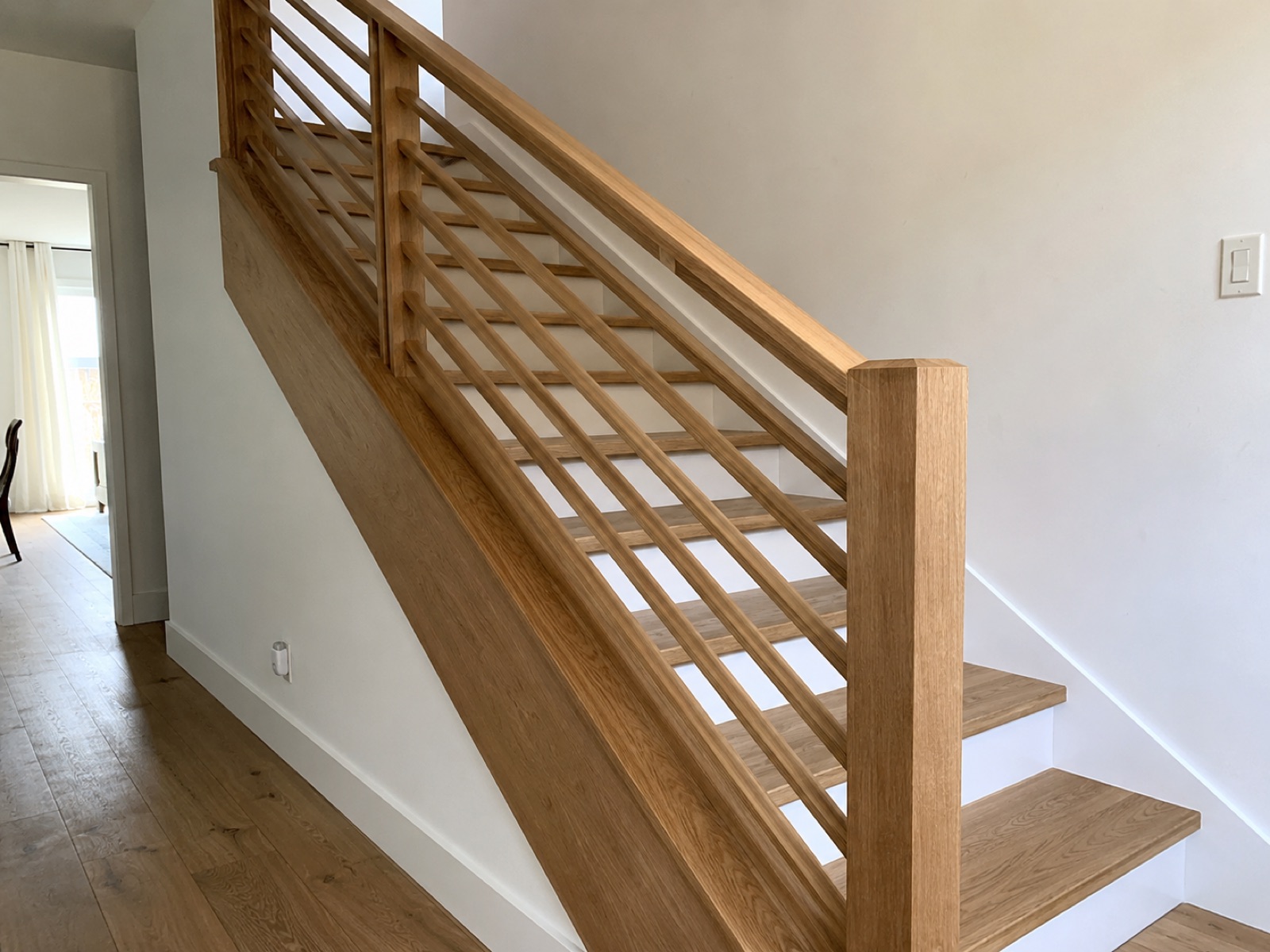
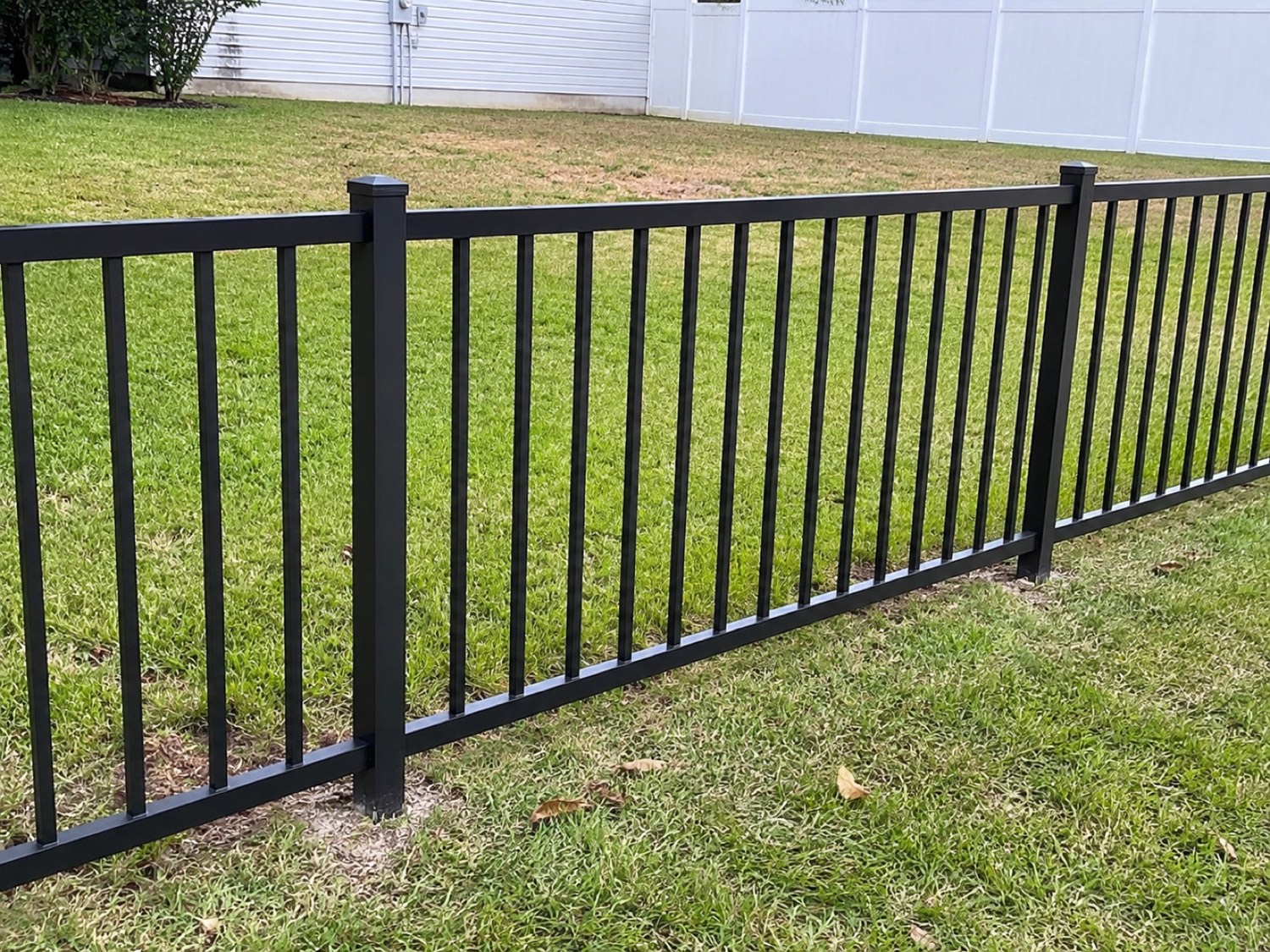
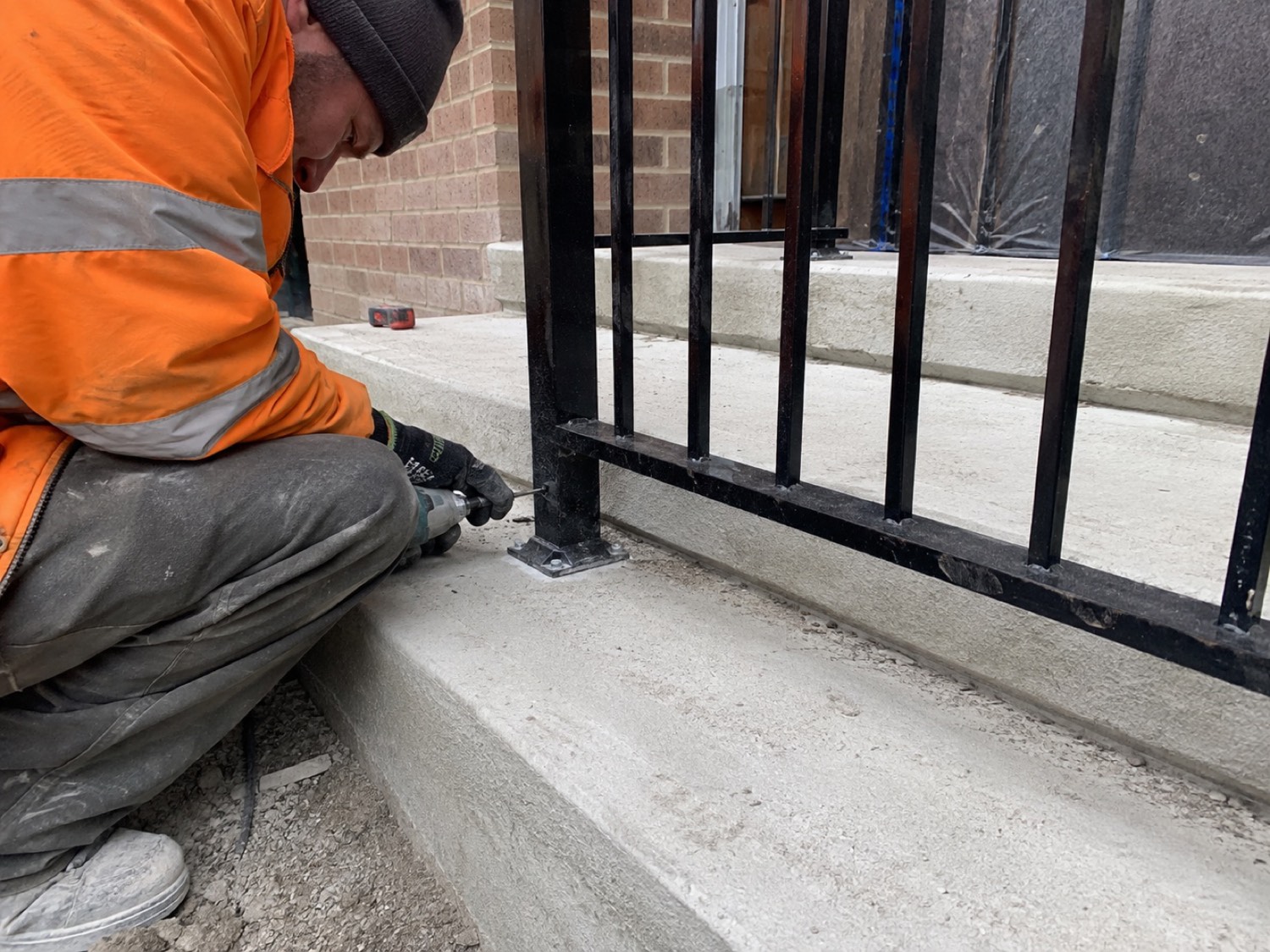
Questions, Answered
What height does an ADA handrail have to be?
Commercial handrails are set 34 to 38 inches from the stair nosing, and the rail must be continuous and graspable for the full run. Guardrails, where required, are 42 inches. Because accessibility amendments vary by jurisdiction, we confirm the exact figures with your local building department before fabricating.
What makes a handrail graspable under code?
A Type I graspable handrail is circular with a 1¼-inch to 2-inch outside diameter, so a hand can close fully around it, and it is mounted with 1½ inches of clearance from the wall. We fabricate the rail as one continuous run rather than interrupted segments.
Why do commercial handrails need extensions past the stairs?
Accessibility code requires the handrail to extend at least 12 inches past the top riser and continue past the bottom riser, giving a user support as they step onto the landing. Missing or short extensions are one of the most common reasons a commercial stair fails inspection, so we build them in from the drawing stage.
How much load does a commercial rail have to hold?
A handrail must resist a 200-lb concentrated load applied in any direction, and a guardrail top rail must resist 20 lb per linear foot. We engineer the anchoring and material so the finished rail meets those load paths, which matters most on high-traffic public stairs.
Can you upgrade an existing commercial stair to ADA compliance?
Yes. We assess your current handrails and guardrails on-site, identify where height, profile, clearance, extensions, or load fall short, and fabricate compliant replacements or retrofits. We coordinate the final code and accessibility inspection so the corrected stair signs off cleanly.
Ready to get started?
Alameda Custom Railing provides fast, same-day custom railing across Alameda, CA and the surrounding area — flat-rate pricing, licensed and insured, with 24/7 emergency service. Call now, request a free estimate or head back to our homepage.