
Best Railing Materials for Salt Air & Coastal Corrosion (Bay Area)
Salt air is the enemy of the wrong metal
If your home is near the Bay — and on Alameda, an island at sea level, everything is — the single biggest factor in how long your railing lasts is not the design, it is the material. Salt-laden air is relentlessly corrosive, and it finds every unprotected surface. Choose the wrong metal and you will be fighting rust streaks within a season or two; choose the right one and your railing outlives the mortgage. This guide explains why bare and mild steel fail near the water and walks through the four materials that actually survive coastal exposure. For the right spec on your site, call (510) 390-9618.
Why bare and mild steel fail near the Bay
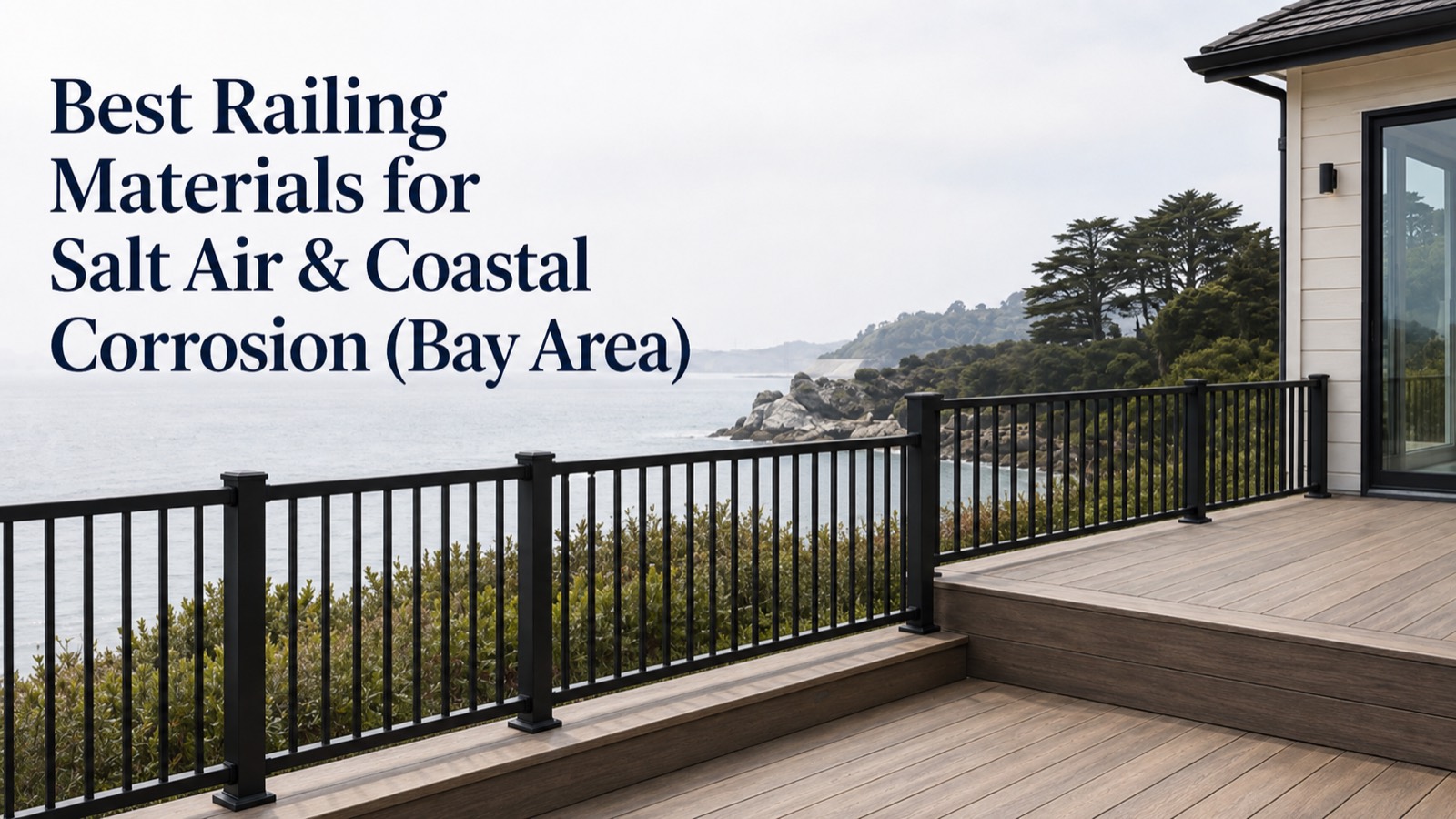
Bare and mild carbon steel corrode when moisture and oxygen reach the metal, and salt dramatically speeds that reaction — it is an electrolyte that accelerates rust. On the Alameda waterfront, the air carries a constant fine load of salt that settles on railings and stays damp in the marine layer. An unprotected steel rail starts with surface rust, then pitting, then structural loss at welds and anchor points — exactly the connections a guard depends on to pass its load test. Paint alone is not enough; the first chip or scratch becomes a corrosion entry point. Near the Bay, corrosion resistance has to be engineered in, not brushed on. The marine layer makes it worse than a coastal average, too: fog and damp keep surfaces wet for long stretches, giving salt more time to work, so a finish or alloy that would be fine in a drier climate can still fall short here.
Planning a concrete project in Alameda or the East Bay? Get a free, no-obligation on-site estimate and a written flat-rate price.
The four materials that survive the coast
| Material | How it resists salt air | Best use |
|---|---|---|
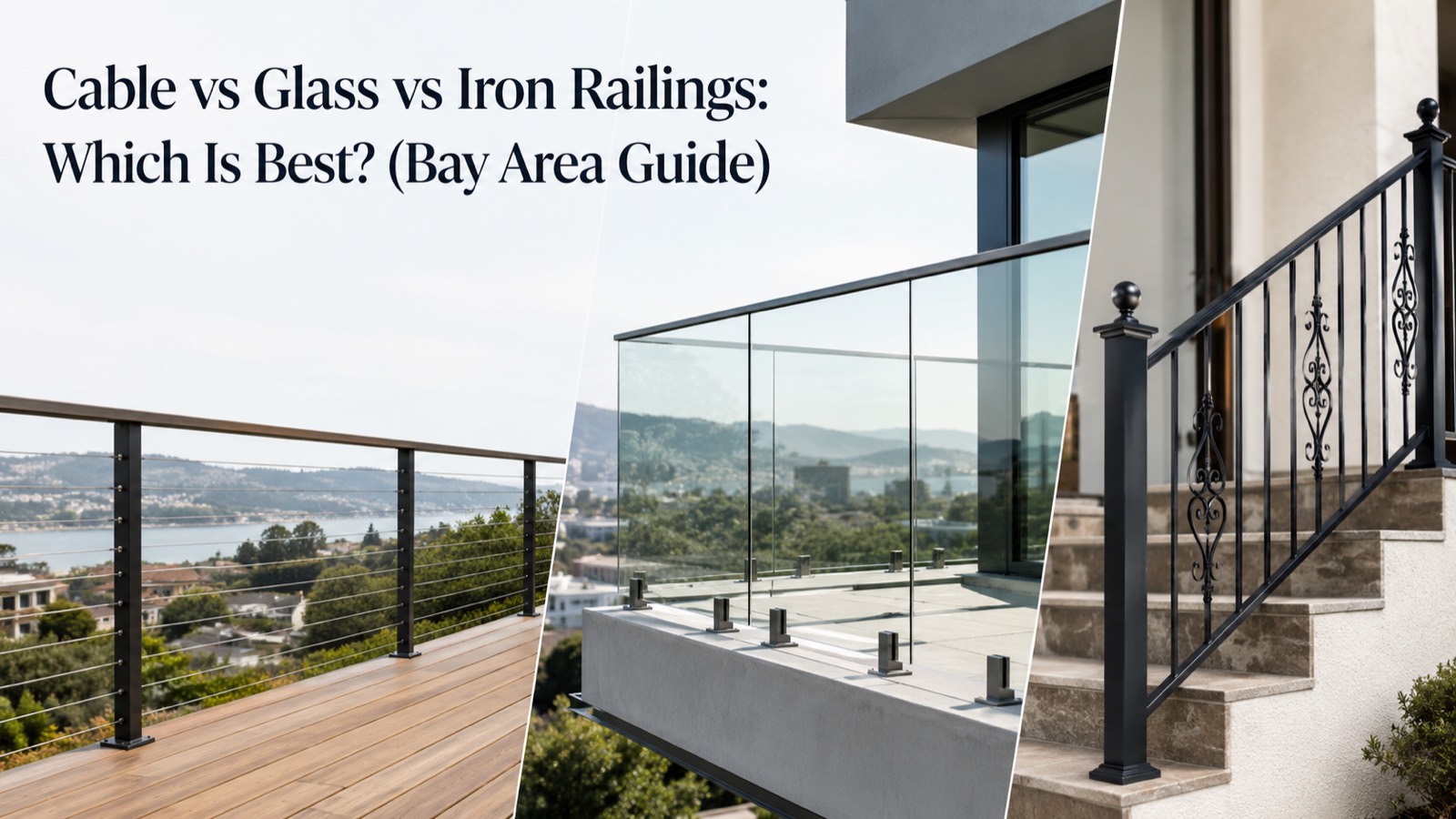
| 316 marine-grade stainless | Molybdenum alloy resists chloride pitting | Cable railing, hardware, fasteners |
| Powder coat over prepped steel | Oven-cured barrier seals the metal | Ornamental iron, aluminum frames |
| Hot-dip galvanizing | Zinc coating sacrificially protects steel | Structural steel, posts |
| Aluminum | Self-passivating oxide layer; won’t rust | Deck and balcony frames, lightweight runs |
316 marine-grade stainless
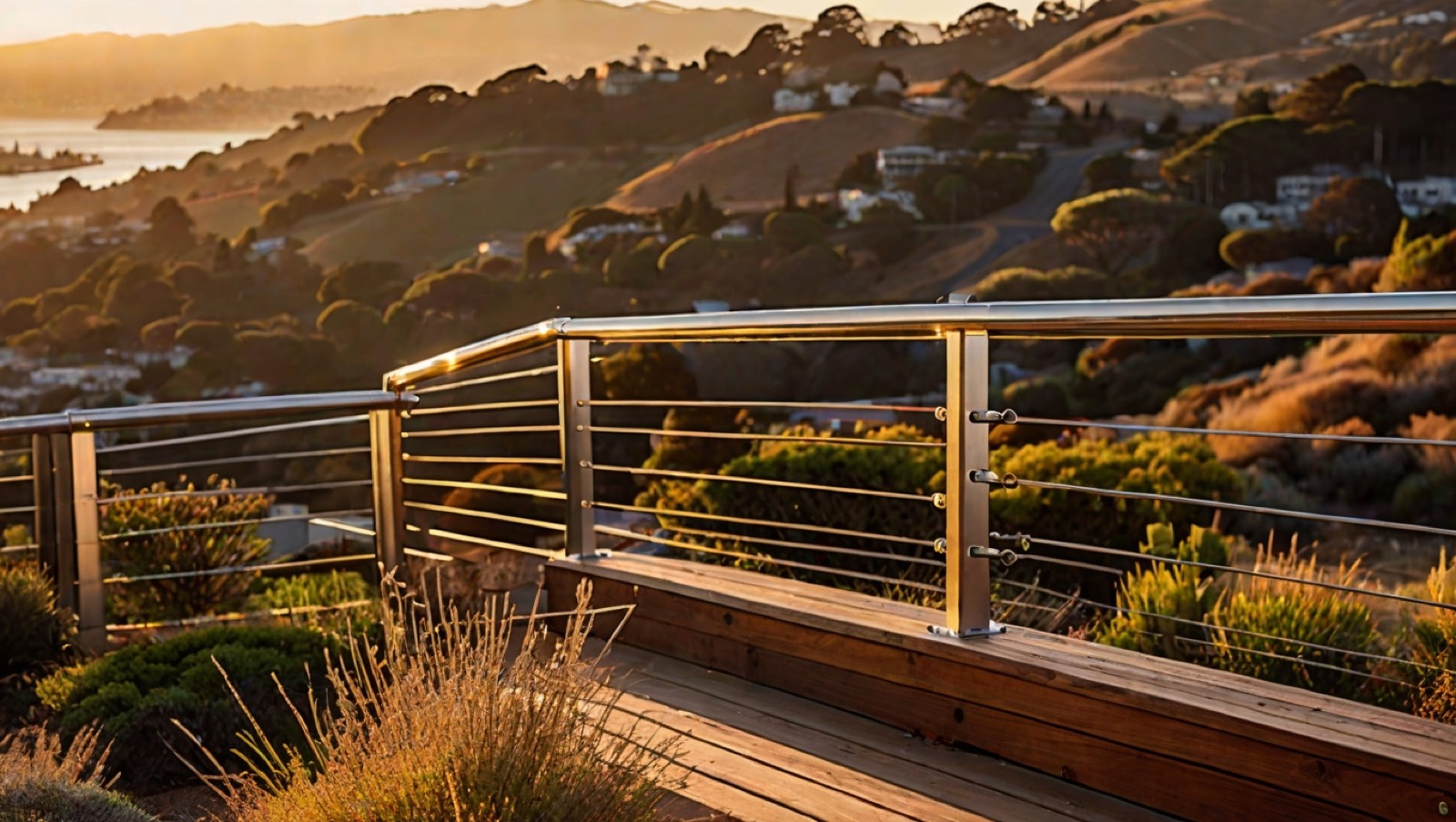
When people say “stainless,” coastal projects should mean 316, not the cheaper 304. The difference is molybdenum, which gives 316 its resistance to the chloride pitting that salt air causes. It is the correct choice for cable railing — the 1/8″–3/16″ aircraft cable, the tensioners, and every fastener — because those thin, highly stressed parts have zero tolerance for corrosion. It costs more than mild steel, and that premium is a big reason Bay Area railing prices skew high, but on the water it is simply the right metal.
Powder coat and hot-dip galvanizing
For ornamental iron, the defense is a proper finish. Powder coating is an electrostatically applied, oven-cured polymer that forms a tough, sealed barrier far more durable than liquid paint — the key is surface prep and, on the coast, often a zinc primer underneath. Hot-dip galvanizing takes it further for structural steel: the part is dipped in molten zinc, which bonds to the steel and protects it sacrificially, corroding itself before the steel does. For coastal iron, a galvanize-then-powder-coat “duplex” approach gives the longest life. Either way, touch up any chips promptly — the barrier only works while it is intact.
Aluminum
Powder-coated aluminum is the low-maintenance workhorse of coastal railings. Aluminum forms its own protective oxide layer and simply does not rust the way steel does, so even if the coating is scratched you will not get the red streaks of corroding iron. It is lightweight, which eases installation on decks and balconies, and powder coating adds both color and an extra barrier. It is not as strong per section as steel, so posts and spacing are engineered accordingly, but for many salt-exposed deck runs it is the practical, durable, budget-friendly pick.
A word on the details that quietly sink otherwise-good coastal railings: fasteners and dissimilar metals. Salt air makes galvanic corrosion a real risk, where two different metals in contact corrode faster than either would alone. A 316 stainless cable system defeated by cheap zinc-plated fasteners, or an aluminum rail bolted to a rusting steel bracket, will fail at the connection long before the main material does. Matching the fasteners and isolating dissimilar metals is exactly the kind of thing an experienced coastal fabricator handles as a matter of course and a big-box kit does not.
Alameda: ground zero for the material argument
Nowhere is this more important than Alameda. The whole island sits near sea level, so from the Gold Coast to Bay Farm Island to Marina Village, every exterior railing lives in maximal marine exposure. That is exactly why we lead with corrosion strategy here: 316 stainless cable for view decks, powder-coat and galvanizing for ironwork, aluminum where weight and rust resistance both matter. Spend on the metal that survives the salt and you buy decades; cut the corner and you buy a repaint.
The same logic scales across the island’s different exposures. A railing on a Bay Farm Island deck facing open water takes more salt load than one tucked behind a house in the East End, and the material spec should reflect that — the most exposed runs are where 316 stainless and duplex finishes earn their keep, while a sheltered courtyard rail can sometimes step down. That is a judgment call best made on-site, looking at the actual orientation, prevailing wind, and how much spray the railing will really see. Blanket answers overspend in some spots and underprotect in others.
Building near the water? We’ll spec the right corrosion-resistant material for your exact exposure — free on-site estimate. Call (510) 390-9618.
Questions, Answered
What is the best railing material for salt air?
316 marine-grade stainless for cable and hardware, powder-coated or hot-dip galvanized steel for ironwork, and aluminum for lightweight deck runs all resist coastal corrosion. Bare and mild steel are the materials to avoid near the Bay.
What is the difference between 304 and 316 stainless?
316 contains molybdenum, which resists the chloride pitting caused by salt air, so it is the correct grade for coastal and waterfront railings. 304 is cheaper but corrodes faster in marine environments.
Does aluminum rust near the ocean?
No — aluminum forms a self-protecting oxide layer and does not rust like steel, which makes powder-coated aluminum a durable, low-maintenance choice for coastal decks. Call (510) 390-9618 to discuss your project.
Need Help in Alameda?
Alameda Custom Railing provides fast, same-day custom railing across Alameda, CA and the surrounding area — flat-rate pricing, licensed and insured, with 24/7 emergency service. Landed on this article from a search? Head back to our homepage to see everything we do, or reach out now.